The Happy Face
Feel Amazing in Your Skin—Midlife Face Fitness Made Simple

The Happy Face
Fascia is one of the most fascinating and overlooked systems in the body.
It is often described as a liquid-like, webbed structure that wraps around everything within us. More accurately, fascia is a sheet of fibrous connective tissue made up of closely packed bundles of collagen. It connects and supports our muscles, bones, nerves, and blood vessels, holding everything together in a beautifully intelligent and integrated system.
It is incredibly strong, yet also highly responsive and adaptable.
Why fascia matters so much
In a healthy state, fascia is hydrated, elastic, and fluid. It allows smooth movement, supports posture, and helps maintain the natural lift and structure of the body and face.
However, the natural ageing process—combined with modern sedentary lifestyles—can change the quality of our fascia over time. When we move less, hydrate less, and hold chronic tension in the body and face, fascia can shift from being supple and fluid to becoming tight, sticky, or restricted.
This change doesn’t just affect how we feel—it can also affect how we look.

Fascia and the ageing face
In the face, fascia plays a key role in supporting skin tone, structure, and lift. It acts like an internal scaffolding system, helping the skin maintain its natural plumpness and glow.
As we age, fascia can gradually lose its optimal position and elasticity. Combined with gravity, reduced collagen production, and repetitive facial tension, this can contribute to:
Fine lines and deeper lines
Loss of facial volume and firmness
A tired or heavier appearance
Reduced natural lift and glow
When fascia becomes restricted or “stuck,” the skin above it can reflect that tension.
Why facial movement is essential
Our faces are designed to move.
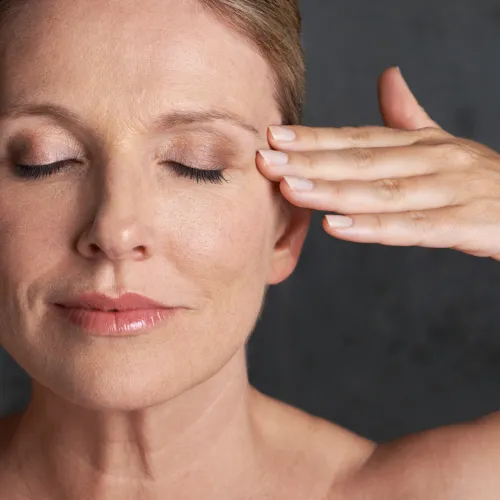
Expression, massage, and mindful facial movement are not just cosmetic—they are functional. Movement helps to keep the fascia hydrated, elastic, and responsive.
This is where facial massage and micro-fascial release techniques become so powerful.
By gently working into the tissues of the face, we can encourage the fascia to soften, release, and rehydrate. This helps to restore mobility and create more freedom in the facial structure.

The power of fascial release
When we work with the fascia rather than against it, we begin to unlock its natural rejuvenating potential.
Facial massage and fascia-focused techniques can help to:
Release long-held tension in the face and jaw
Improve circulation and oxygen flow to the skin
Support lymphatic drainage and reduce puffiness
Restore softness, elasticity, and hydration to the tissues
Encourage a more lifted, sculpted appearance
Think of it as reawakening the face—bringing it back into a more fluid, youthful state of movement.

Can we “reset” the fascia?
While ageing is a natural process we cannot stop, we can absolutely influence how our fascia behaves.
Through consistent facial massage, mindful touch, and daily movement practices, we can help elongate and soften the fascia. This can support the face in returning to a more open, lifted, and relaxed expression.
It is not about forcing change—it is about creating the right conditions for the face to function and feel its best.
Your face is not static. It is alive, responsive, and deeply connected to how you move, feel, and live.
When we care for the fascia beneath the surface, we are not just working on the skin—we are supporting the foundation of facial health and vitality.
A few minutes of daily facial massage can be a powerful act of self-care, helping you reconnect with your face, release stored tension, and support a more radiant, natural glow from within.
Ready to Stop Fighting and Start Glowing?

Small Rituals Make a Difference
Life is busy.
We juggle work, family and endless to-do lists, and somewhere along the way self-care often slips to the bottom.
Maybe you’ve noticed your skin looking a little dull, fine lines deepening, or your energy feeling a little drained.
If that sounds familiar, you’re not alone.
This is exactly why I created Glow & Go.
Glow & Go is a simple face fitness course designed for real life — giving you visible results in minimal time.
With just five one-minute exercises for five days, you’ll discover simple yet powerful techniques that lift, tone and relax your face and neck, leaving you glowing both inside and out.
Because caring for your face doesn’t have to be complicated.
Sometimes the most powerful changes come from the smallest daily rituals.
And sometimes those rituals are the very things that bring us back to ourselves.
CONNECT
© Copyright 2026 The Happy Face | designed and developed by creativa.org.uk